


German Lemus: Art Therapy for Veterans
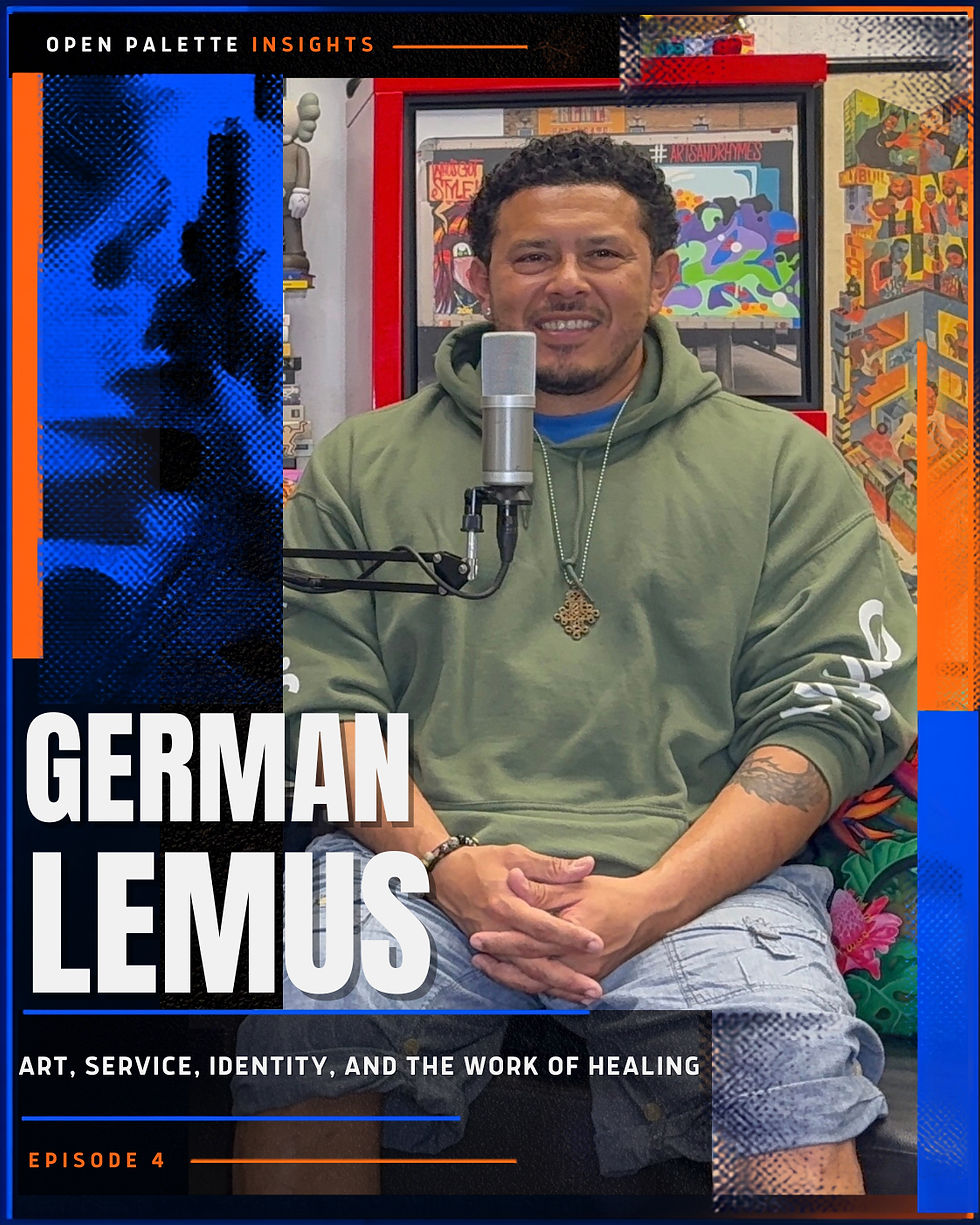
In Episode 4 of The Open Palette Podcast, host Brian Camacho sits down with German Lemus, a Honduran born artist, military veteran, muralist, and longtime contributor to Central Florida’s creative community. Their conversation considers how art can become a language, a discipline, and a means of recovery when personal experience exceeds what ordinary words can carry.
Watch the Full Conversation
Finding a Language Through Art
Lemus was born in Honduras and raised in Miami, where visual expression first became essential. Arriving without fluency in English, he discovered that drawing could communicate before language did. Art gave him a way to participate, observe, and make himself understood. The example of his father, German Lemus Sr., provided an early model for what creative practice could look like.
That beginning shaped a view of art grounded in necessity rather than decoration. For Lemus, creativity was not initially a career strategy. It was a practical and emotional language, one that allowed him to translate experience into images.
Service, Structure, and an Unexpected Assignment
After moving to Central Florida, Lemus joined the armed forces. Even during military training, drawing continued to surface. He filled the margins of his notes with portraits and humorous sketches of his drill sergeants. When the drawings were discovered, what appeared likely to become a disciplinary problem became an artistic assignment. He was asked to create murals and help beautify the barracks.
The moment revealed something important. Art could change how a person was seen inside a rigid institution. It could create connection, offer relief, and open a role that had not previously existed.
Art is truly a conduit, a way for you to communicate your experiences.
Creativity as a Path Toward Healing
Lemus later recognized that the same instinct that helped him navigate unfamiliar environments could also support veterans carrying trauma. Art offered a place to process memories, silence, grief, and the emotional weight that often follows military service. His perspective does not treat creativity as a substitute for professional care. Instead, it recognizes art as one meaningful tool within a broader process of recovery and communication.
His message to veterans is equally direct. Support exists, and asking for help is an act of strength. He encourages veterans experiencing post traumatic stress or other forms of trauma to explore programs available through the Department of Veterans Affairs while also finding constructive ways to express what they have lived through.
The Community That Sharpened the Work
Lemus also reflects on the influence of Orlando’s B Side Artists. Working among artists including Swamburger, Chris Tobar Rodriguez, Mark Harris, Peterson Guerrier, and others pushed him to clarify his own visual voice. The collective created an environment where competition could remain constructive, where artists challenged one another while building opportunities together.
At a time when Orlando’s institutions were not always prepared to embrace urban art, the group’s exhibitions helped establish new space for murals, street influenced work, and independent creative culture. Their progress was supported by advocates who understood that the city needed their energy.
Treating Creativity as a Profession
A decisive part of Lemus’s development came through Florida’s scenic production industry. Working on professional sets and environments taught him that creative ability must be supported by preparation. Showing up on time, carrying the right tools, maintaining insurance, understanding contracts, and completing work under pressure all became part of his artistic education.
That experience sharpened his understanding of branding and administration. A recognizable visual identity matters, but so do the systems behind it. Contracts, intellectual property, copyright, analytics, and a clear paper trail protect the artist and make long term growth possible.
Culture Without Apology
Lemus’s work is also rooted in cultural memory. He speaks about the importance of expressing everyday experiences that may appear ordinary to one community and deeply meaningful to another. Food, color, spirituality, family, and music all become part of the visual vocabulary. His goal is not to translate those experiences into something more acceptable. It is to present them with confidence and without apology.
That principle connects his admiration for the lasting power of reggae and artists such as Bob Marley. Lemus is interested in work that carries rhythm, conviction, and social meaning while remaining personal enough to feel honest.
A Practice Built on Purpose
The conversation with German Lemus demonstrates that an artist’s practice can hold several functions at once. It can communicate across difference, support healing, preserve culture, create income, and strengthen community. None of those outcomes happen through talent alone. They require discipline, relationships, administrative knowledge, and the willingness to keep producing despite negative voices.
Your voice matters. You just have to get productive and do it.
For Lemus, art is not separate from the experiences that shaped him. It is the method through which those experiences are examined, organized, and returned to the world with purpose.
Explore Artist Opportunities: Discover current grants, residencies, scholarships, fellowships and public art opportunities curated by Open Palette.
Next in Open Palette Insights: Episode 2, Jenn Veal: Trusting the Process as an Artist.
The Open Palette Podcast | Where art, culture, and community come together through real conversations.
Access the Full Artist Opportunity Directory

Comments