


Sen2 Figueroa: The Art of Evolution Discipline, Culture, and Staying the Course

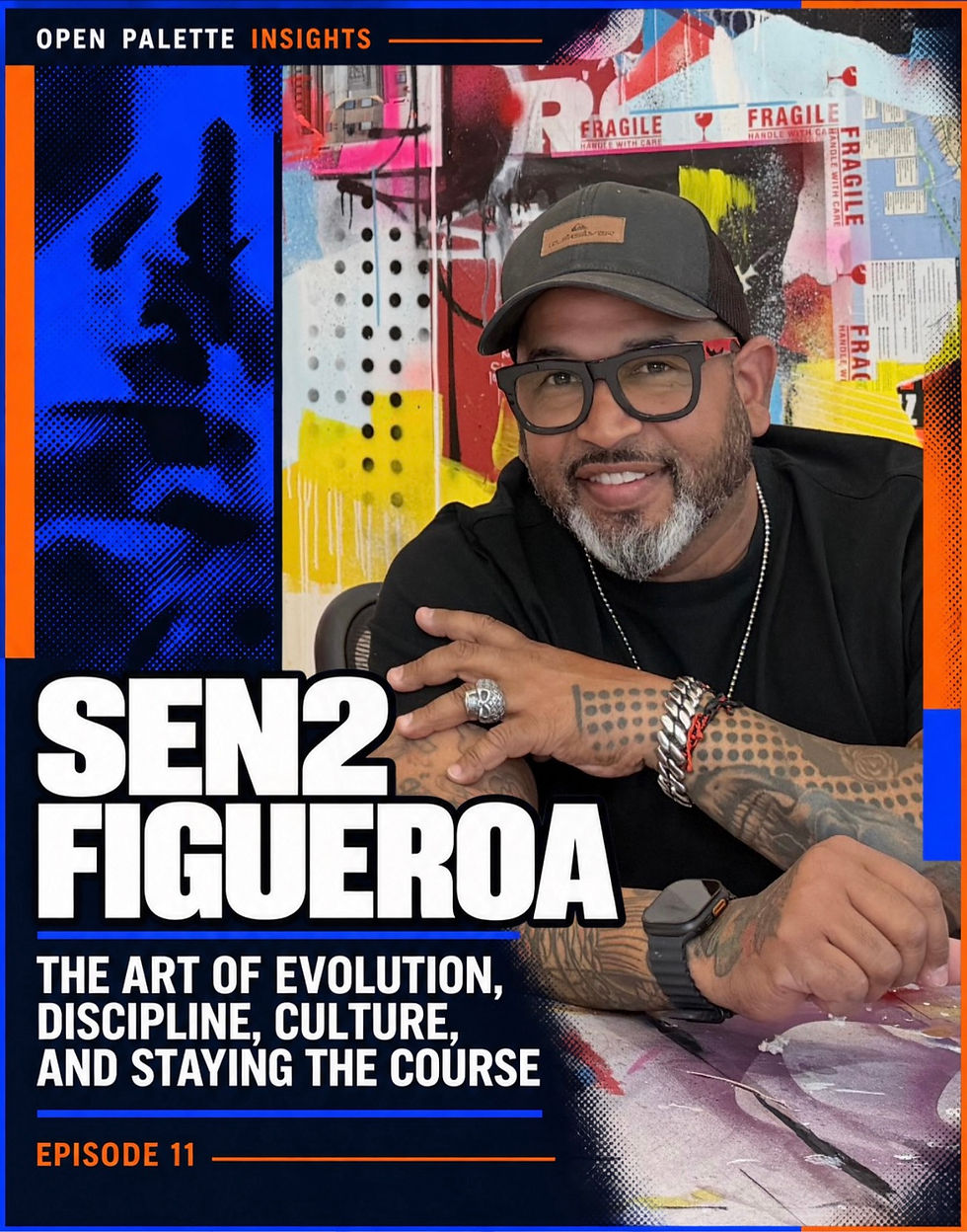
There is a difference between changing because the world expects something new from you and evolving because the work demands that you grow.
Sen2 Figueroa understands that difference.
Across decades of painting, graffiti, murals, studio work, gallery exhibitions, and international projects, his visual language has continued to move forward without disconnecting from the culture that created it.
The surfaces have changed. The scale has changed. The audience has changed. But the foundation has remained.
Born Sandro Luis Figueroa García and raised in the Cantera neighborhood of Puerto Rico, Sen2's story begins with a deep connection to place. Puerto Rico is not simply part of his biography. It remains present inside the colors, energy, memories, and visual rhythm of his work.
That foundation would eventually meet another influence: New York City.
Trips to the Bronx introduced him to graffiti culture at a moment when the language of the streets was becoming impossible to ignore.
What followed was not an overnight transformation. It was a long process of watching, painting, failing, learning, experimenting, and returning to the work again.
For Sen2, evolution has never meant abandoning where he started. It has meant learning how to carry it further.
Bringing Puerto Rico Into the Painting
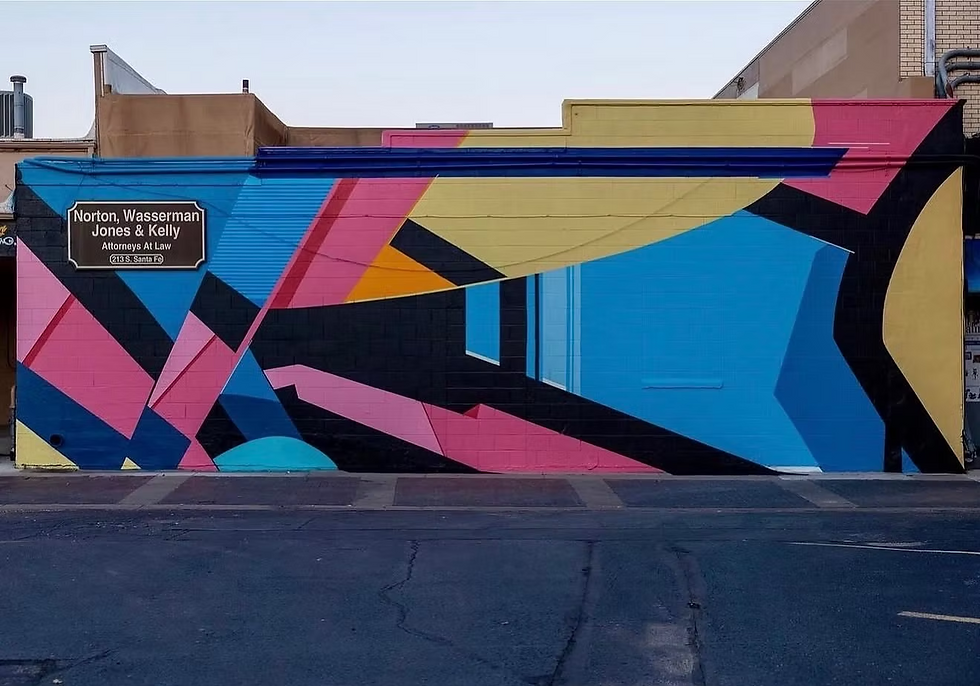
Color has always been personal for Sen2.
When he talks about Puerto Rico, he describes blue skies, intensely blue water, white sand, brightly colored homes, and neighborhoods filled with yellow, red, and other vivid tones. Those memories became part of his palette long before they became part of a larger artistic statement.
He wants the work to carry some of that Puerto Rico with it.
That matters because cultural identity in art does not always need to appear literally.
Sometimes it exists in color. Sometimes in rhythm. Sometimes in attitude. Sometimes in the way an artist combines visual languages that, on the surface, may appear unrelated.
Sen2 describes his work almost like preparing food different ingredients entering the same pot but ultimately becoming one thing.
Graffiti - Abstract painting - Pop influence - Contemporary art - Transparency - Lettering - Color - Memory - Culture
Those elements do not compete with one another. They build the language.
His graffiti tags still appear within paintings, sometimes layered transparently into the composition in what he describes as an X-ray effect. The rules and visual instincts developed years earlier remain inside the contemporary work even when the final result no longer resembles a traditional graffiti piece.
The evolution is visible. But so are the roots.

Staying the Course When Trends Change
The art world constantly tells artists what is next.
A new visual style becomes popular. A particular palette begins appearing everywhere. A certain subject suddenly becomes marketable.
Artists watch what receives attention and understandably begin questioning whether they should move in that direction too.
Sen2 has spent much of his career resisting that pressure.
Not because he refuses to change. His work has changed significantly. But there is a difference between evolution and imitation.
His approach has been to continue refining the language he already possesses rather than abandoning it every time something new becomes fashionable.
That commitment is part of what gives the work continuity.
Someone familiar with Sen2's history can look at a contemporary painting and still recognize traces of the graffiti writer.
The lettering may be submerged. The tags may become transparent. The compositions may become more abstract. The materials may change. But the DNA remains.
Artists often believe they must continually reinvent themselves to remain relevant.
Sen2's career offers another possibility: You can move forward without erasing yourself.

Discipline Is the Invisible Part of the Artwork
The finished artwork is what the audience sees. The discipline behind it usually remains invisible.
Sen2 speaks repeatedly about that hidden part of the process.
Studio practice is not simply walking into a room and waiting for inspiration.
Materials have to be prepared. Paper has to be handled correctly. Paint has to be mixed. Collections have to be planned. Colors need consistency while still retaining the artist's touch.
He describes mixing multiple versions of reds, yellows, and blues himself, often working by eye rather than relying on exact calibration. Each day of repeating that process teaches him something new.
That repetition matters.
The more experienced an artist becomes, the easier it can be to assume that mastery has been reached.
Sen2 rejects that idea.
He continues learning from the materials. From the studio. From collectors. From other artists. And from himself.
That willingness to remain a student may be one of the most important forms of discipline.
Experience should not eliminate curiosity. It should deepen it.

From Graffiti to Contemporary Art
For Sen2, graffiti is not something he escaped from in order to become a contemporary artist.
It is something he carried with him.
He speaks forcefully about the misconception that graffiti is simply vandalism.
To him, graffiti contains technique, structure, design, physical endurance, decision-making, and discipline. A wall requires planning. A sketch becomes an outline. An outline becomes fill, dimension, movement, and finished form. The artist's hand and body are both involved in producing the result.
Entering galleries did not invalidate that education. It expanded it.
The transition into contemporary art required Sen2 to understand an entirely different system.
Collections. Exhibitions. Collectors. Pricing. CVs. Biographies. Websites. Professional documentation. Gallery relationships.
The artwork could remain expressive, but the career surrounding it required structure.
That shift can be difficult for artists who come from environments where the work itself was the primary credential.
In the street, people see what you painted.
In the gallery world, people also want to understand where the work has been shown, who has collected it, what exhibitions you have participated in, how the practice has developed, and where the artist may be going next.
The history becomes part of the value.

Building Value Slowly
Sen2 speaks about career growth almost like climbing one step at a time.
A solo exhibition adds something. Another gallery adds something. A major mural adds something. Years of consistent work add something. Collectors begin following. Prices move gradually. The biography grows. The CV grows.
Nothing replaces the previous step. Each one becomes part of the record.
He learned that an artist's value is not simply determined by deciding one morning that a painting should cost more.
Value is built through a history that people can follow.
Exhibitions. Projects. Sales. Reputation. Consistency. Time.
There is an important distinction here between price and value.
Price can be changed instantly. Value takes time.
Respecting the People Who Believe in the Work
Sen2 also views collectors differently now than he did earlier in his career.
A collector is not simply someone purchasing an object.
That person is choosing to participate in the artist's trajectory.
They are placing trust in the artist. They are following the evolution. And, in many cases, they are making a financial commitment based on the belief that the artist will continue showing up.
That creates responsibility.
Sen2 talks about not wanting to disappoint the people who have supported him.
Not because an artist should create according to someone else's expectations, but because professionalism requires respecting the relationship.
You arrive. You finish. You prepare correctly. You deliver what was promised.
Discipline becomes a form of respect.
Learning From Other Artists Without Losing Yourself
One of the strongest ideas throughout Sen2's conversation is his openness about learning from other artists.
He speaks about younger artists who motivate him. Peers who teach him. Mentors who corrected him. Artists who helped him understand galleries. People who showed him how to structure a CV. Others who introduced him to techniques he had not yet developed.
There is no embarrassment in that.
He openly acknowledges that he did not begin as the strongest painter.
He remembers being the one who had more to learn.
Rather than rewriting that history, he uses it as evidence of what discipline can produce.
At one point he describes himself as having once been among the weakest painters around him before eventually becoming an artist he could confidently place among respected Puerto Rican practitioners.
That admission reveals something important about artistic development.
Talent may begin the process. Practice changes the outcome.
When Closed Doors Change the Direction
Not every stage of Sen2's career came from being welcomed into a space.
Sometimes the opposite happened.
There were exhibitions he was not invited to. Groups that did not include him. Opportunities that did not arrive. People who moved on.
Rather than spending his entire career trying to force entry into the same rooms, he began looking elsewhere.
Europe became one of those directions.
What initially appeared to be exclusion eventually helped create another path.
That does not mean rejection is easy.
It means rejection does not automatically have to determine the ending.
Sometimes an artist's career changes because someone opens a door.
Sometimes it changes because the door stays closed long enough that the artist finally builds another entrance.
Sen2's journey across galleries, exhibitions, murals, and international relationships demonstrates how creative careers rarely move in straight lines.
The important question is not whether every opportunity appears. It is whether you keep moving when one does not.
The Personal Memory Inside the Work
One of the most revealing moments of Sen2's conversation comes when he discusses the eyes that appear throughout his work.
People had compared those visual elements to other artists.
But their origin was personal.
They came from memories of his mother.
He remembers watching her paint her eyes and lips while growing up — small visual experiences that stayed with him and later entered the work as his art moved between graffiti and gallery painting.
This is where influence becomes more complicated.
Artists are constantly absorbing information.
Other paintings. Advertising. Neighborhoods. Family. Music. Architecture. Fashion. Graffiti. Memory.
Sen2 acknowledges that nobody creates in complete isolation.
Everyone takes something from somewhere.
The question is what happens after the influence enters you.
Do you copy it? Or do you process it through your own history until it becomes yours?
His answer is visible in the work.

The People Who Help Us Become Artists
Sen2 speaks with deep gratitude about the artists and mentors who helped him throughout different periods of his career.
Some helped him improve technically. Some introduced him to galleries. Some taught him how to present himself professionally. Some showed him how contemporary art operated beyond the culture he already understood.
Several of those mentors are no longer alive.
He talks about them almost as if they continue traveling with him.
That idea carries emotional weight because artistic careers are rarely built entirely alone, even when they may eventually appear that way from the outside.
Someone gives advice. Someone corrects a mistake. Someone introduces a possibility. Someone believes before the larger audience does.
Sen2 describes those people as angels who helped keep him on track while he was learning a world he did not yet fully understand.
Success often makes the artist visible. It can make the people behind that artist invisible.
Sen2 remembers them.
Staying Grounded While Moving Forward
For all the international exhibitions, galleries, collectors, murals, and recognition surrounding his career, Sen2 repeatedly returns to humility.
His mother's influence appears again here.
No matter what was happening outside the home, inside the house he was still Sandro.
There was garbage to take out. A bathroom to clean. Normal responsibilities remained normal responsibilities.
It is a simple lesson, but an important one.
Recognition can distort perspective.
Attention can make an artist believe the world now operates differently around them.
Sen2 refuses that idea.
After decades of painting, he still talks about keeping his feet on the ground.
He does not describe himself as better than everyone else.
He describes himself as someone who kept working long enough to become good at what he does.
That distinction may explain more about his longevity than almost anything else.
Evolution Without Erasure
Sen2's story is ultimately not about choosing between graffiti and contemporary art.
It is not about deciding whether the street is more authentic than the gallery.
It is not about remaining frozen inside the visual language that first introduced the world to his work.
It is about understanding that evolution does not require erasure.
You can learn new systems without forgetting the old ones.
You can enter galleries without pretending the wall never mattered.
You can build collectors without allowing the market to dictate every decision.
You can learn from younger artists without feeling diminished by them.
You can honor mentors while still developing your own voice.
You can leave Puerto Rico and still carry Puerto Rico inside the painting.
And you can change without becoming unrecognizable to yourself.
Sen2's career is evidence that staying the course does not mean standing still.
It means knowing what parts of yourself should continue moving with you.
Discipline creates the structure. Culture provides the foundation. Experience expands the language. Humility keeps the artist grounded.
And evolution becomes not the abandonment of who you were, but the continued construction of who you are becoming.
For Sen2, that process is still happening.
One painting at a time.
The Takeaway
Discipline does more than produce work. It gives an artist the structure to evolve without losing the culture and history that shaped the work.
Sen2 Figueroa's career shows that staying the course does not mean refusing change. It means allowing experience to expand the language without erasing its foundation.
Graffiti, studio practice, galleries, collectors, and international exhibitions become chapters of the same story when the artist remains connected to the source.
The materials matter. The preparation matters. The relationships matter. The years spent learning and repeating the process matter.
Longevity is built by continuing to show up with humility, curiosity, and respect for the people who helped make the journey possible.
Evolution becomes strongest when growth adds to the artist's identity instead of replacing it.
Continue Your Creative Journey
Explore Artist Opportunities: Discover current grants, residencies, mural calls, fellowships, and public art opportunities curated by Open Palette.
Next in Open Palette Insights: Episode 12.
The Open Palette Podcast | Where art, culture, and community come together through real conversations.


Comments